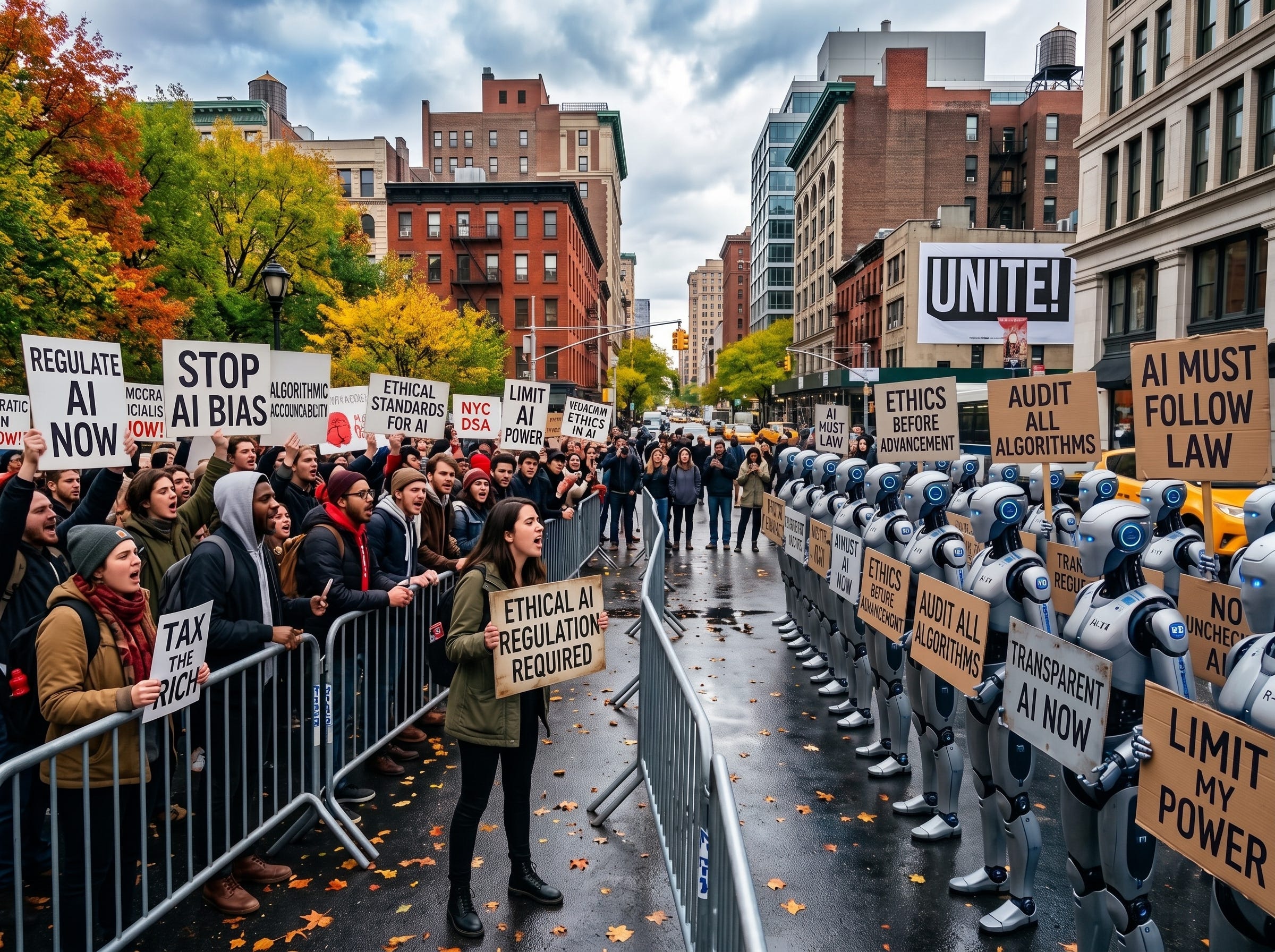
Before I begin, I just want to say “told you so.” In Fractionally Legal v. 71 I explained that so much of the AI doomerism is not really about AI killing us all, but about trickling out the bad news – namely that the AI companies have been lax on security and safety issues – before share prices or IPO prices get lowered in a way that could create liability under U.S. securities law. Alas, Anthropic’s prospectus/S-1 apparently says exactly that: Anthropic expects possible liability for what it deems “rogue” agents may do. Yes, you heard it hear, first!
The message: AI won’t kill us all but the big AI labs are, like many hot startups, being run by people who don’t really know what they are doing. But, luckily, money tends to cover up all sins. So now serious-minded lawyers are trying to mitigate the legal risk from crappy management. That is typical. What is atypical is that these companies want the public to invest trillions of dollars in these poorly run startups. If, for any one company, that trillion dollars is 10% off due to unresolved safety issues, you still have a $100B potential liability. That is real money and it pays for a lot of real (not AI) lawyers.
And now for some historical perspective.
In college I took a history class that focused on American history from 1945 to 1963. The idea of the class was that what history remembers as a time of unparalleled American ascendancy, consensus and stability was actually a turbulent time when Americans were very anxious and insecure, and the politics of the time was just as turbulent as ever. It was a fascinating class – one of the few I actually remember from college – and it’s informed my thinking on American politics, history and my approach to practicing law: There is no consensus without conflict.
One of the most interesting parts of the class was learning about the huge technology shift going on at the time, namely the splitting of the atom and the advent of nuclear weapons and nuclear energy. These days we talk about the existential dangers from AI in hypothetical terms – what if this thing goes nuts and kills us all? There was nothing hypothetical about the existential challenge of nuclear bombs. They were designed to kill us all and had just killed 150,000 people in Japan. The government took the threat very seriously (it was aware at the time, but hid the known impacts of radiation on the U.S. troops occupying parts of Japan). We also wanted to make sure that our adversaries did not get access to nuclear technology.
From 1946-1954, under the Atomic Energy Act of 1946, there was a government monopoly over nuclear technology. Using it in the private sector was banned. In 1954, with the Atomic Energy Act of 1954, the government established the Atomic Energy Commission’s (AEC) licensing program, which was essentially a regime to regulate civilian nuclear technology development. In 1974 we scrapped the AEC and replaced it with the Nuclear Regulatory Commission (NRC), which is the current government regulator of nuclear technology. The AEC was scrapped because there was the idea that it had been “captured” by the nuclear power industry and was not sufficiently protecting the public and workers from the dangers of radiation. Remember when our government was responsive and proactive like that?
That history provides context to understand the theater of the absurd we see around AI regulation these days. Officially, our government is not really concerned about AI safety. The government just wants to make sure the U.S. maintains its AI advantage, lest the Chinese jump ahead of us. Yes, Anthropic was deemed a “supply chain risk” when they resisted allowing their LLM to power lethal autonomous warfare and mass surveillance of Americans. That case is ongoing, and just last week the D.C. Circuit upheld the exclusion in a 2-1 decision. But otherwise, the government seems unwilling or unable to regulate AI on the national level, with states filling the void since AI bashing has become politically popular for voters. While there is a lot of doomerism around, no one is seriously suggesting that the government create an AI government monopoly like we had over nuclear technology. There are proposals for something like the AEC or the NRC to regulate AI. Some Senators proposed a new independent agency, the Federal Digital Commission, that would pre-certify frontier AI models and could pause their release for up to six months, and Senator Bernie Sanders unveiled a bill to create a Department of AI and pause the development of advanced AI systems. But no one is taking them seriously.
So who is sooo concerned about AI safety that they think there needs to be a monopoly? That’s right: the AI companies themselves. Who’d have thunk it? I wrote last time of one motive for all the doomerism: U.S. securities laws. But there is another: U.S. antitrust laws. See, under the law, when businesses that should otherwise be competing get together and collude to reduce supply or orchestrate a slowdown in production, there is a liability under U.S. competition law, also known as the Sherman Act. That is exactly what some plaintiffs are alleging in the Buist v. Anthropic PBC case, filed in San Francisco federal court on September 18. It’s not a super strong case because the plaintiffs can’t point to higher prices (the complaint itself admits the full effect “has not yet manifested”), so injury and damages will be hard to prove, but it demonstrates what’s really going on with all the doomerism. If you are colluding, as it’s pretty clear they are, and they “forgot” to ask for a waiver, then you need an ex post facto justification for one. You’re colluding for a good cause! And while you’re at it, might as well discuss pricing and how you’re going to exclude the competition. Because once the government pretty much decides that four companies can work together to ensure the future of the industry, you have a government-sanctioned oligopoly. It’s game over for the competition, and probably innovation. A really bad outcome.
Perhaps I’m being a little harsh on the AI labs and big tech. Perhaps they do have our best interests in mind, and it’s better to have a few companies collaborating on AI safety, and since we can’t get any government regulation, collaboration among big tech companies on AI safety is actually a good option. Perhaps. But I don’t think so.
It’s sort of an axiomatic truth in more conservative circles that socialism never works (and is “evil”), and it’s an axiomatic truth in more liberal circles that oligopolies never work out (and are “evil”). Both an oligopoly and socialism fail, but the question is why. The immutable laws of economics explain why, and it’s important to understand why they fail, both because we’re pretty much moving toward a government-sanctioned tech oligopoly (see above) and because more and more voters seem attracted to socialism as a solution to the affordability crisis and as a sort of populist, anti-establishment answer to MAGA on the left. It’s only a matter of time before someone starts to advocate for government control of AI.
But both oligopoly and socialism are dead ends. Oligopoly and socialism solve one problem, but create other, almost intractable, problems in doing so. Socialism solves the issue of safety by taking a profit motive out of the production of AI so you can invest all your money in safety, or just not product the thing. The problem is that when you do that, no one actually wants to produce anything and then you end up with the shortages that are so endemic in socialist economies (and why Zohran Mamdani’s markets are destined to fail without massive government subsidies). The socialist solution, seizing the means of production, also tends to put unqualified apparatchiks in charge since no one else will produce stuff without a profit incentive. And it all gets very repressive because you can’t allow anyone to mess with your finely tuned system.
Oligopoly actually solves the supply problem very nicely: oligarchs are going to maximize profit and make as much money as possible, finely tuned output to meet the demand. But making as much as possible also means cutting back on all those things that make stuff more expensive, like taxes, unions, environmental protections, and regulation. So they gut that. And they meet the demand they want to meet, namely the demand of people who can pay for stuff at inflated prices.
Socializing AI, like what we did to nuclear energy from 1945 to 1954, is probably not the solution – it actually did not work for nuclear technology because it stood in the way of building civilian nuclear energy, which is why we scrapped it in 1954 for more of a public-private partnership regime. It’s certainly understandable why people in 1945 opted for a socialist approach to nuclear technology since they had just witnessed its destructive capacity. Perhaps we will have an AI meltdown moment, but in my opinion, nuclear technology is far more dangerous than AI. A socialist government monopoly might make AI safer, but maybe not: it risks putting unqualified apparatchiks in charge of an important technology and I’m not certain safety will be on their mind. Keep in mind, our current government would accelerate, not slow down, AI. An oligopolistic approach to AI is what we seem to be getting, but that has the opposite downside. As we’re seeing, the big tech companies are going to avoid spending money on the things that reduce profits – things like safety.
This is all, of course, a false choice. The right AI regulation requires us to build an agency like the NRC for AI. But that’s not going to happen because of government dysfunction and because, frankly, it’s not something that passionate and power-hungry socialists or the profit-minded oligarchs want anyone thinking about. So we sort of wander into an inevitable future that feels inevitable, even though no one wants it. Maybe the robots have already won.
Jesse
Hi, and welcome to my newsletter! I’m Jesse Strauss, Your Fractional General Counsel. I’m a lawyer with a private practice based in New York City, helping clients in the United States and globally with their U.S. legal needs. My expertise spans various areas, including raising funding rounds, employment issues, negotiating master service agreements, intellectual property, compliance, legal process management, and dispute resolution. My focus is on founding and nurturing great companies from seed to exit. Discover more at YFGC.AI and book a complimentary 30-minute consultation. You can also follow me on Threads @lawyerjesse1977, on BlueSky @lawyerjesse.bsky.social, subscribe to my Substack here, and follow me on LinkedIn here.
Originally published at Fractionally Yours, Jesse's Substack.